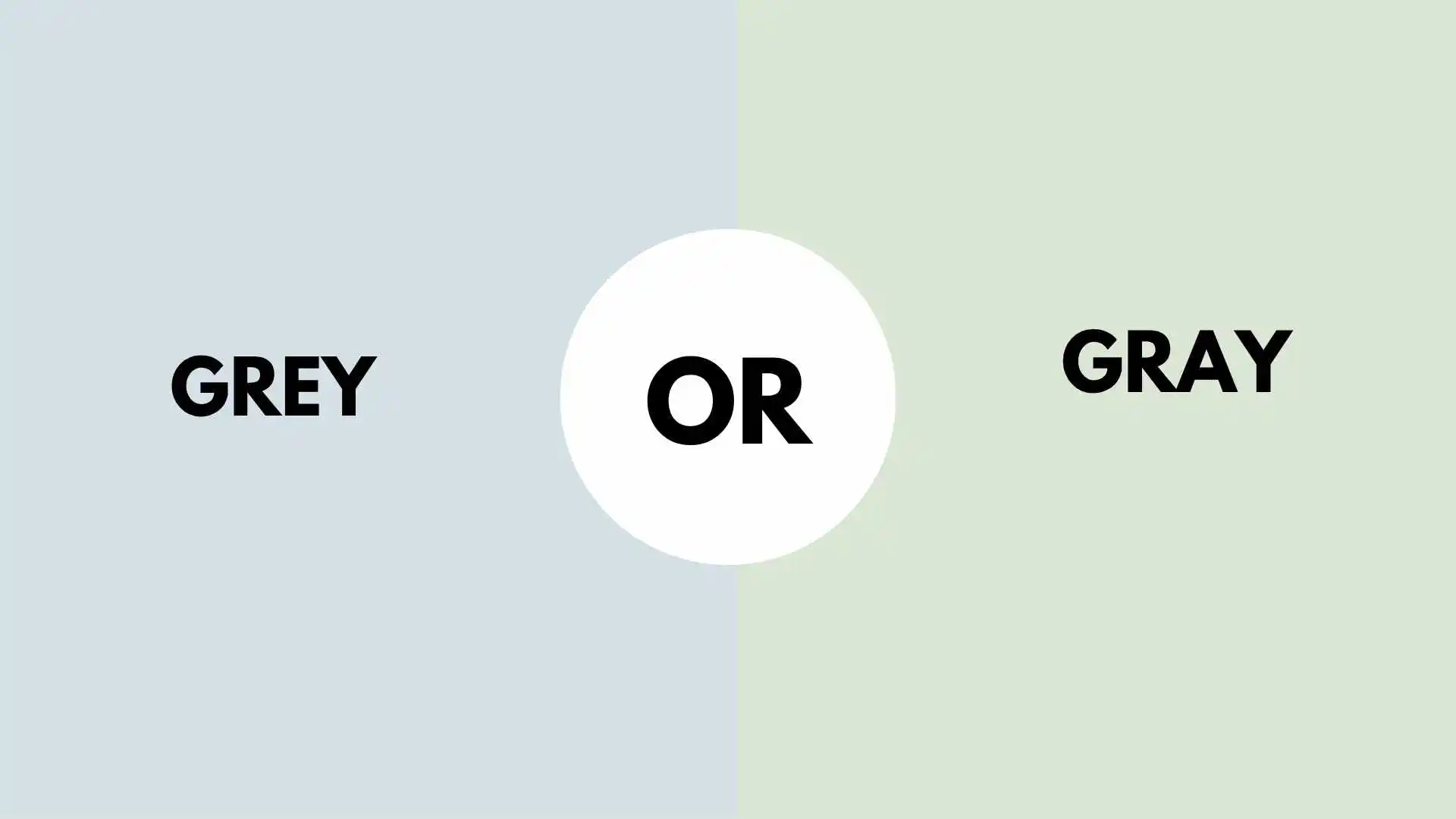
Have you ever stopped while writing and wondered whether to use “grey” or “gray”? You are not alone. This is one of the most common spelling confusions in English, especially for learners and even native speakers. Both words look almost the same and sound exactly the same, which makes the confusion even more frustrating.
Many people search for “grey or gray” because they want to know which spelling is correct. Is one wrong? Does it depend on location? Or is it just a personal choice? These are common questions that arise when dealing with this pair of words.
Understanding the difference is important because using the correct spelling can improve your writing, especially in formal situations like exams, business communication, or content writing. In this article, you will learn the meanings, differences, usage, grammar rules, and simple tips to remember when to use grey or gray.
Quick Answer
Both “grey” and “gray” mean the same color between black and white. The only difference is spelling based on region:
- “Gray” is used in American English
- “Grey” is used in British English
Meaning and Definition of Each Word
What Does “Gray” Mean?
Gray is a color that is a mix of black and white. It can also describe something dull, cloudy, or unclear.
Examples:
- The sky looks gray before a storm.
- He wore a gray suit to the meeting.
- Her hair turned gray with age.
What Does “Grey” Mean?
Grey has exactly the same meaning as “gray.” The only difference is the spelling used in British English and other regions.
Examples:
- The sky looks grey today.
- She bought a grey sweater.
- His beard is turning grey.
Key Differences Between Grey and Gray
Although both words have the same meaning, their usage depends on location and style.
- Region-based spelling:
- Gray → American English (USA)
- Grey → British English (UK, Canada, Australia)
- Meaning:
- Both mean the same color
- Pronunciation:
- Both are pronounced the same way
- Correctness:
- Both are correct, depending on context
- Usage consistency:
- You should stick to one spelling in the same document
Comparison Table
| Word | Meaning | Usage Region | Example Sentence |
| Gray | Color between black and white | American English | The walls are painted gray. |
| Grey | Color between black and white | British English | The walls are painted grey. |
Examples in Sentences
“Gray” (American English)
- The cat has soft gray fur.
- I bought a gray jacket yesterday.
- The clouds turned gray before it rained.
- His hair is slowly becoming gray.
- The room was painted light gray.
“Grey” (British English)
- The cat has soft grey fur.
- She prefers a grey dress.
- The sky looks grey and dull.
- His hair is turning grey.
- The car is painted dark grey.
Common Mistakes
Here are some mistakes people often make when using grey or gray:
1. Mixing Both Spellings in One Text
❌ Incorrect:
- The sky is gray, and the clouds are grey.
✅ Correct:
- The sky is gray, and the clouds are gray. (American English)
OR - The sky is grey, and the clouds are grey. (British English)
2. Thinking One Is Wrong
❌ Incorrect belief:
- “Grey” is wrong spelling.
✅ Correct understanding:
- Both are correct, depending on region.
3. Using the Wrong Style in Formal Writing
❌ Incorrect:
- Using “grey” in an American academic paper
✅ Correct:
- Use “gray” in American English writing
Tips to Remember the Difference
Here are some easy tricks to help you remember:
1. “A” for America → Gray
- Gray has “A”
- America also has “A”
👉 So, Gray = American English
2. “E” for England → Grey
- Grey has “E”
- England also has “E”
👉 So, Grey = British English
3. Stay Consistent
Once you choose one spelling, use it throughout your writing.
When to Use Each Word
Use “Gray” When:
- Writing for an American audience
- Studying or working in the United States
- Following American English rules
- Writing academic or professional documents in the U.S.
Use “Grey” When:
- Writing for a British audience
- Studying in the UK, Canada, or Australia
- Following British English spelling rules
- Writing international content using British style
Grammar Rules (If Applicable)
There are no complex grammar rules for grey or gray because they are simply spelling variations of the same word.
However, keep these points in mind:
- Both can be used as:
- Adjective: a gray shirt / a grey sky
- Noun: a shade of gray / a shade of grey
- Always follow the spelling style of your document:
- American English → gray
- British English → grey
Synonyms or Related Words
Here are some related words you can use instead of grey or gray:
- Silver
- Ash-colored
- Slate
- Charcoal
- Smoky
- Dull
Example:
- The sky was charcoal instead of gray.
Frequently Asked Questions (FAQs)
1. Is “gray” or “grey” correct?
Both are correct. “Gray” is used in American English, while “grey” is used in British English.
2. Which spelling should I use in exams?
It depends on the English style required:
- American exams → use “gray”
- British exams → use “grey”
3. Do “gray” and “grey” have different meanings?
No, they have the exact same meaning.
4. Is one spelling more popular than the other?
- “Gray” is more common in the United States
- “Grey” is more common in the UK and other countries
5. Can I use both in the same article?
No, it is better to stay consistent and use only one spelling.
6. Why are there two spellings?
English has evolved differently in different regions, leading to variations like “gray” and “grey.”
Conclusion
The confusion between grey or gray is very common, but the solution is simple. Both words mean the same thing and are correct. The only difference lies in regional spelling American English prefers gray, while British English prefers grey.
To use them correctly, just remember where your audience is and stay consistent in your writing. With the simple tips shared in this guide, you can easily avoid mistakes and feel confident using either spelling.