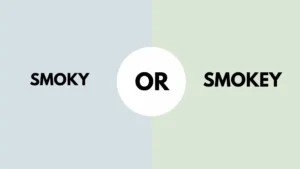
Have you ever been confused about whether to write “smoky” or “smokey”? You’re not alone. Many people search for smoky or smokey because both spellings appear in everyday writing, on food menus, in books, and even in brand names. This can make it hard to know which one is actually correct.
The confusion mainly happens because English spelling is not always consistent. Sometimes, both versions of a word exist, but only one is standard in formal writing. That’s exactly what happens with “smoky” and “smokey.” Understanding the difference is important, especially if you want to improve your writing, avoid mistakes, and sound more professional.
In this article, you will learn the correct usage, meanings, differences, examples, and grammar rules related to smoky or smokey. By the end, you’ll never be confused about these words again.
Quick Answer
“Smoky” is the correct and standard spelling in English. It means something that has the smell, taste, or appearance of smoke.
“Smokey” is usually incorrect, except when used as a proper name (like a person, character, or brand).
Meaning and Definition of Each Word
1. Smoky
Definition:
“Smoky” is an adjective used to describe something that contains smoke, smells like smoke, or has a flavor created by smoke.
Simple Explanation:
If something is filled with smoke or tastes like smoke (like grilled food), we use “smoky.”
Examples:
- The room was filled with smoky air.
- This barbecue has a rich smoky flavor.
- The sky looked dark and smoky after the fire.
2. Smokey
Definition:
“Smokey” is not a standard spelling of the adjective. It is mainly used as a name or proper noun.
Simple Explanation:
You might see “Smokey” used as a name, but not in normal descriptive writing.
Examples:
- Smokey is my dog’s name.
- Have you heard of Smokey Bear?
- My friend calls his car “Smokey.”
Key Differences Between Smoky and Smokey
Here are the main differences between smoky or smokey:
- Correct spelling: “Smoky” is the correct standard spelling.
- Usage: “Smoky” is used in general writing; “Smokey” is mostly used as a name.
- Grammar role: “Smoky” is an adjective; “Smokey” is usually a proper noun.
- Formality: “Smoky” is used in formal and informal English; “Smokey” is not used in formal descriptions.
- Common context: Food, air, and atmosphere use “smoky,” not “smokey.”
Comparison Table
| Word | Meaning | Usage | Example |
| Smoky | Full of smoke or having a smoke-like flavor | Standard adjective | The kitchen smelled smoky. |
| Smokey | A name or non-standard spelling | Proper noun or informal use | Smokey is my cat’s name. |
Examples in Sentences
Using “Smoky” Correctly
- The fire created a smoky smell in the house.
- I love the smoky taste of grilled chicken.
- The air became smoky during the wildfire.
- She wore dark makeup with a smoky eye look.
- The bar had a warm and smoky atmosphere.
Using “Smokey” (as a Name)
- Smokey ran across the yard.
- We named our puppy Smokey.
- Smokey is a famous cartoon character.
Common Mistakes
Many learners make simple mistakes when choosing between smoky or smokey. Let’s look at some examples.
Incorrect vs Correct Usage
The room was smokey after the fire.❌
The room was smoky after the fire.✅
I like the smokey flavor of this dish.❌
I like the smoky flavor of this dish.✅
The sky looked smokey.❌
The sky looked smoky.✅
✔ Correct (Name): Smokey is sleeping on the couch.
Key Point:
Use “smoky” for descriptions, not “smokey.”
Tips to Remember the Difference
Here are some easy tricks to remember smoky or smokey:
- Tip 1:
Think of “smoky” as similar to words like “cloudy” or “windy.” These adjectives end in “-y,” not “-ey.” - Tip 2:
If you are describing something (food, air, smell), always use smoky. - Tip 3:
If it’s a name (like a pet or character), then “Smokey” is okay. - Tip 4:
Remove the confusion by asking:
“Am I describing something?” → Use smoky
When to Use Each Word
Use “Smoky” When:
- Talking about food flavors
Example: This meat has a smoky taste. - Describing air or atmosphere
Example: The room was smoky. - Talking about smells
Example: There is a smoky smell in the kitchen. - Describing colors or makeup
Example: She has smoky eye makeup.
Use “Smokey” When:
- Referring to a name
Example: Smokey is my dog. - Mentioning a brand or character
Example: Smokey Bear is a famous figure.
Grammar Rules (If Applicable)
Here are some simple grammar rules related to smoky or smokey:
- “Smoky” is an adjective
It describes nouns (things, places, or people).
Example: smoky air, smoky flavor - Adjective Formation Rule
Many adjectives end with “-y,” not “-ey.”
Examples:- Cloud → Cloudy
- Dust → Dusty
- Smoke → Smoky
- Proper Nouns Use Capital Letters
“Smokey” is capitalized when used as a name.
Example: Smokey the cat
Synonyms or Related Words
Here are some words similar to “smoky”:
- Smoldering
- Hazy
- Burnt-flavored
- Charred
- Ashy
- Foggy (in some contexts)
Example:
The air was hazy and smoky after the fire.
Frequently Asked Questions (FAQs)
1. Is it smoky or smokey?
The correct spelling is smoky. “Smokey” is mostly used as a name.
2. Why do people write smokey instead of smoky?
People often assume “-ey” is correct because of similar-looking words or names, but standard English uses smoky.
3. Is smokey ever correct?
Yes, but only as a proper noun, like a person’s name or a character.
4. How do you spell smoky flavor?
The correct spelling is smoky flavor, not “smokey flavor.”
5. Is smoky American or British English?
“Smoky” is correct in both American and British English.
6. What does smoky mean in makeup?
In makeup, “smoky” refers to a dark, blended eye look, often called a “smoky eye.”
Conclusion
Understanding the difference between smoky or smokey is simple once you know the rule. “Smoky” is the correct and standard spelling used to describe things like flavor, smell, or atmosphere. On the other hand, “Smokey” is mainly used as a name and should not be used in general writing.
If you remember one thing, let it be this:
👉 Use “smoky” for descriptions and “Smokey” only for names.
With this knowledge, you can now write confidently and avoid a very common English mistake.