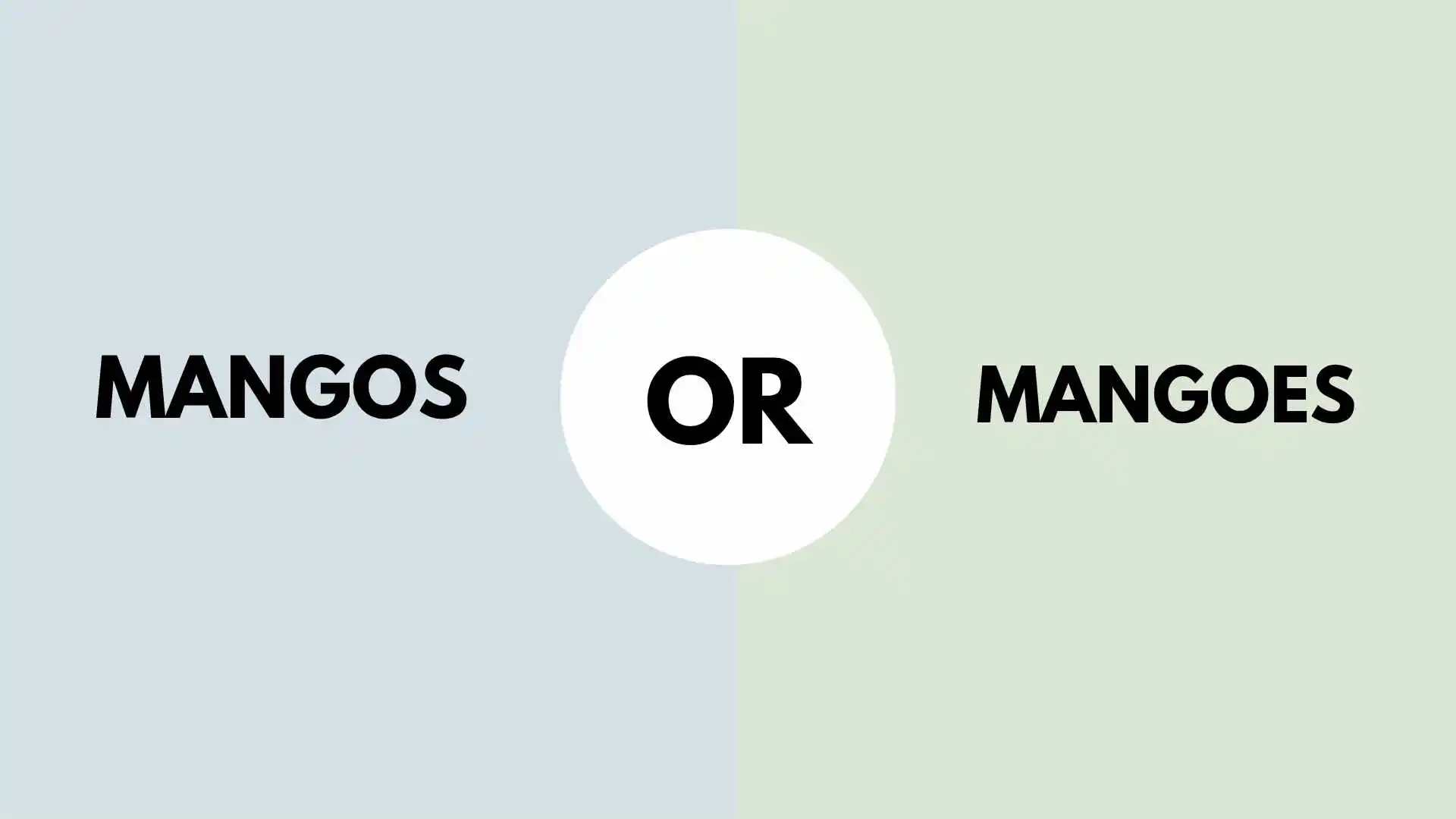
Have you ever stopped while writing and wondered whether to use “mangos” or “mangoes”? You’re not alone. This is one of the most common spelling confusions in English, especially for learners and even native speakers. Both forms appear in books, menus, and online articles, which makes the confusion even stronger.
Many people search for “mangos or mangoes” because they want to know which one is correct and whether one is more formal than the other. English spelling rules can sometimes feel inconsistent, and plural forms are often tricky especially when words end in “-o.”
Understanding the correct usage is important because it improves your writing, makes you sound more confident, and helps you avoid simple grammar mistakes. In this article, you will learn the meanings, differences, grammar rules, examples, and easy tips to remember the correct form.
Quick Answer
Both “mangos” and “mangoes” are correct plural forms of the word “mango.” However, “mangoes” is more commonly used and widely accepted in formal English, while “mangos” is less common but still correct.
Meaning and Definition of Each Word
Mango (Singular Form)
Definition:
A mango is a sweet, tropical fruit with a soft, juicy inside and a large seed.
Example Sentences:
- I ate a ripe mango after lunch.
- This mango tastes very sweet.
Mangos (Plural Form)
Definition:
“Mangos” is a plural form of “mango,” meaning more than one mango.
Explanation:
This spelling follows the simple rule of adding “-s” to make a word plural.
Example Sentences:
- I bought three mangos from the market.
- The tree is full of fresh mangos.
Mangoes (Plural Form)
Definition:
“Mangoes” is also a plural form of “mango.”
Explanation:
This spelling follows a common rule in English where words ending in “-o” take “-es” to form the plural.
Example Sentences:
- The basket is filled with juicy mangoes.
- She loves eating mangoes in summer.
Key Differences Between Mangos and Mangoes
Even though both words mean the same thing, there are small differences in usage:
- Spelling Style:
- “Mangos” uses a simple “-s”
- “Mangoes” uses “-es”
- Popularity:
- “Mangoes” is more commonly used
- “Mangos” is less common
- Formality:
- “Mangoes” is preferred in formal writing
- “Mangos” is acceptable in informal contexts
- Grammar Pattern:
- “Mangoes” follows traditional plural rules for words ending in “-o”
Comparison Table
| Word | Meaning | Usage | Example Sentence |
| Mango | One fruit | Singular form | I ate a mango. |
| Mangos | More than one mango | Less common plural form | I bought two mangos. |
| Mangoes | More than one mango | More common and formal plural | She sliced fresh mangoes. |
Examples in Sentences
Here are more real-life examples to help you understand how to use both forms correctly:
Using “Mangoes”
- Mangoes are my favorite fruit.
- We made juice from fresh mangoes.
- The shop sells imported mangoes.
- Mangoes are rich in vitamins.
Using “Mangos”
- He picked mangos from the tree.
- They packed mangos for export.
- I saw a basket full of mangos.
👉 Tip: Even though both are correct, you will see “mangoes” more often in books and articles.
Common Mistakes
Many learners make simple mistakes when using “mangos or mangoes.”
Mistake 1: Thinking Only One is Correct
❌ Incorrect: Only “mangoes” is correct
✅ Correct: Both “mangos” and “mangoes” are correct
Mistake 2: Mixing Forms in the Same Sentence
❌ Incorrect: I bought mangoes and mangos.
✅ Correct: I bought mangoes. (or) I bought mangos.
Mistake 3: Using Wrong Plural Rules
❌ Incorrect: Mango → Mango’s (this shows possession, not plural)
✅ Correct: Mango → Mangoes or Mangos
Tips to Remember the Difference
Here are some simple tricks to help you remember:
- Tip 1: Think “ES is safer”
When in doubt, use “mangoes” because it is more widely accepted. - Tip 2: Follow the pattern of similar words
Words like:- Potato → Potatoes
- Tomato → Tomatoes
So, Mango → Mangoes
- Tip 3: Keep it simple for casual writing
You can use “mangos” in informal writing like messages or notes. - Tip 4: Use what you see more often
Since “mangoes” appears more in books and media, it’s easier to remember.
When to Use Each Word
Use “Mangoes” When:
- Writing formally (essays, articles, emails)
- You want to follow standard grammar rules
- You are unsure which one to choose
Use “Mangos” When:
- Writing informally (texts, casual writing)
- You prefer a simpler spelling
- The style guide you follow allows it
Grammar Rules (Important)
The confusion between “mangos or mangoes” comes from English plural rules.
Rule for Words Ending in “-O”
There are two common patterns:
- Add “-es”
- Tomato → Tomatoes
- Potato → Potatoes
- Mango → Mangoes
- Add “-s”
- Photo → Photos
- Piano → Pianos
- Mango → Mangos (less common)
👉 This is why both “mangos” and “mangoes” are correct.
English does not always follow one strict rule, so some words accept both forms.
Synonyms or Related Words
While there are no direct synonyms for “mango,” here are some related words:
- Tropical fruit
- Sweet fruit
- Fresh fruit
- Fruit pulp
- Juice fruit
You can also use “mango fruit” in descriptive writing.
Frequently Asked Questions (FAQs)
1. Is it mangos or mangoes?
Both are correct, but “mangoes” is more commonly used in standard English.
2. Why are there two plural forms?
English has flexible rules for words ending in “-o,” so both “-s” and “-es” forms are accepted.
3. Which one should I use in exams?
Use “mangoes” to be safe, as it is more widely accepted in formal writing.
4. Is “mangos” wrong?
No, “mangos” is not wrong. It is just less common than “mangoes.”
5. Do native speakers use both forms?
Yes, native speakers use both, but “mangoes” is more popular.
6. What is the singular form?
The singular form is “mango.”
Conclusion
The confusion between “mangos or mangoes” is completely normal, and now you know the answer clearly. Both forms are correct, but “mangoes” is the preferred and more common choice, especially in formal writing.
If you want to avoid mistakes, simply remember:
👉 When in doubt, go with “mangoes.”
Learning small differences like this can greatly improve your English writing and confidence. Keep practicing, and soon these choices will feel natural!