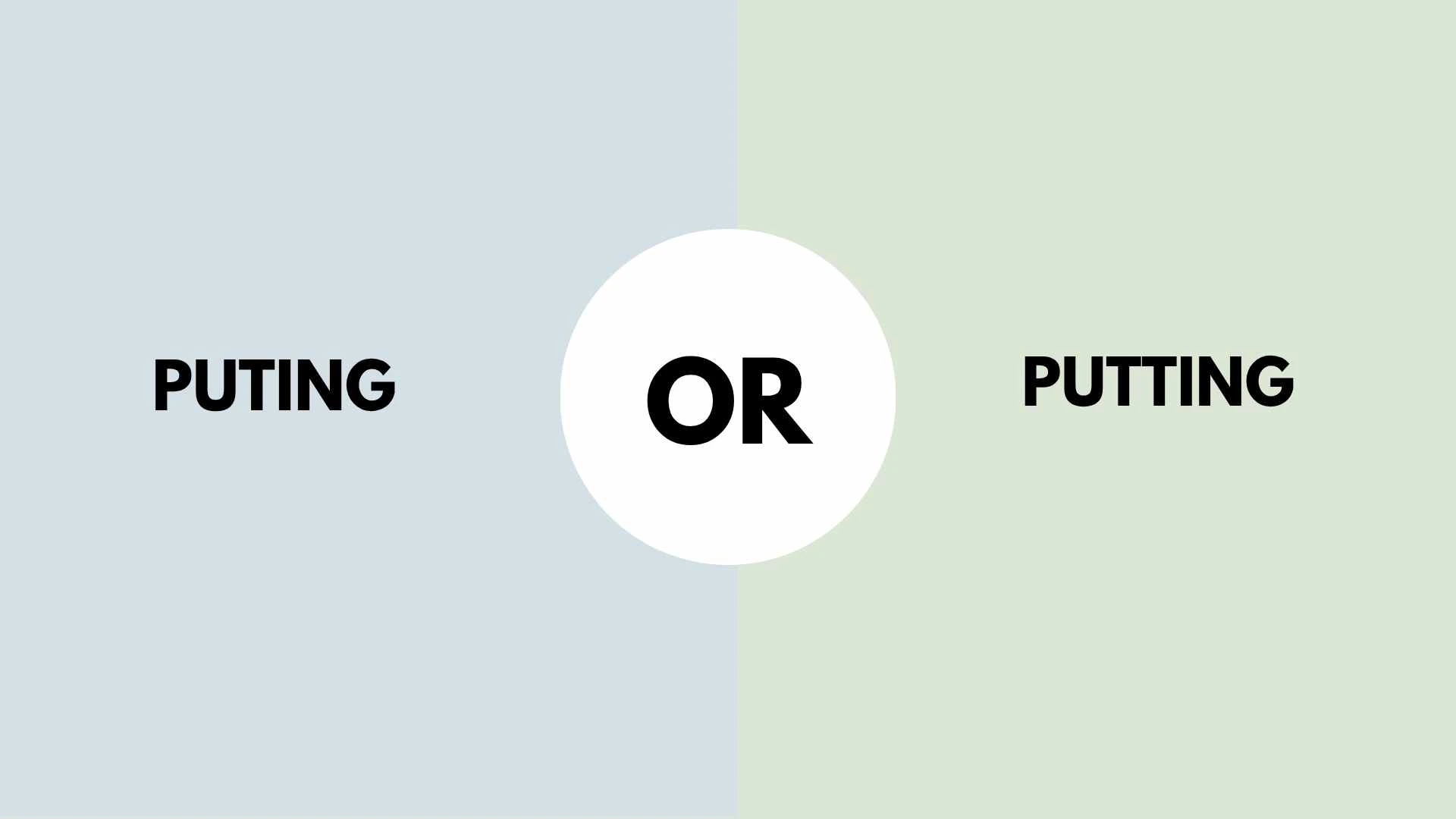
Many English learners often get confused between “puting” or “putting.” At first glance, both words may seem similar, but only one of them is actually correct in standard English. This confusion usually happens because of spelling rules, especially when adding “-ing” to verbs.
People frequently search for “puting or putting” because they want to write correctly in emails, essays, or everyday communication. A small spelling mistake can sometimes change how professional or clear your writing looks. That’s why understanding the correct form is important.
In this detailed guide, you will learn the correct spelling, why it is correct, and how to use it properly. We will also cover examples, common mistakes, grammar rules, and easy tips to help you remember the difference forever.
Quick Answer
The correct spelling is “putting,” not “puting.”
“Putting” is the present participle of the verb “put,” and it requires doubling the letter “t” before adding “-ing.”
“Puting” is incorrect and not used in standard English.
Meaning and Definition of Each Word
1. Putting (Correct Word)
Definition:
“Putting” is the present participle form of the verb “put.” It means placing something somewhere or causing something to be in a particular position.
Simple Explanation:
It describes an action that is happening now or continuously.
Examples:
- She is putting the books on the table.
- He is putting his phone in his pocket.
- They are putting effort into their work.
2. Puting (Incorrect Word)
Definition:
“Puting” is not a correct English word.
Explanation:
It is a common spelling mistake made when learners forget to double the consonant “t” before adding “-ing.”
Example (Incorrect Usage):
- ❌ She is puting the bag on the chair.
Correct Version:
- ✅ She is putting the bag on the chair.
Puting Meaning
“Puting” is usually a misspelling of “putting.” The correct word “putting” is the present participle of the verb “put,” meaning to place, set, or move something into a particular position. For example, She is putting the books on the shelf. In standard English, “puting” is generally considered incorrect.
Puting Definition
There is no standard English definition for “puting” because it is typically a spelling error. The correct form is “putting,” which means placing something somewhere, causing something to be in a certain condition, or taking a particular action. For example, They are putting more effort into the project this year.
Is Putting a Word?
Yes, “putting” is a correct English word. It is the -ing form of the verb “put.” The word is commonly used in everyday speech and writing to describe the act of placing or positioning something. For example, He is putting his keys on the table. It can also be used figuratively, such as putting ideas into practice.
Key Differences Between Puting and Putting
Here are the main differences to clearly understand:
- Correctness:
- “Putting” is correct.
- “Puting” is incorrect.
- Grammar Rule:
- “Putting” follows the rule of doubling the final consonant.
- “Puting” ignores this rule.
- Usage:
- “Putting” is used in sentences.
- “Puting” should never be used.
- Recognition:
- “Putting” is recognized in dictionaries.
- “Puting” is not a valid English word.
Puting or Putting Synonym
The correct word is “putting.” Depending on the context, synonyms include placing, setting, positioning, arranging, depositing, and laying. For example, instead of putting the box on the floor, you could say placing the box on the floor. The best synonym depends on what is being placed and where.
Puting or Putting Golf
In golf, the correct term is “putting.” It refers to the act of using a putter to roll the ball along the green toward the hole. For example, His putting improved significantly after practice. The spelling “puting” is incorrect in golf terminology, just as it is in general English. Putting is an essential skill that can greatly affect a golfer’s overall score.
Comparison Table
| Word | Meaning | Usage | Example Sentence |
| Putting | Placing or moving something somewhere | Correct usage | She is putting the keys on the table. |
| Puting | No meaning (incorrect spelling) | Should not be used | ❌ He is puting his shoes on. |
Examples in Sentences
Using “Putting” Correctly
- I am putting my trust in you.
- She is putting the dishes in the sink.
- They are putting a lot of effort into the project.
- He is putting on his jacket.
- We are putting the plan into action.
Incorrect Use of “Puting”
- ❌ I am puting my bag on the table.
- ❌ She is puting on her shoes.
- ❌ They are puting things away.
Corrected Versions
- ✅ I am putting my bag on the table.
- ✅ She is putting on her shoes.
- ✅ They are putting things away.
Common Mistakes
Here are some common mistakes people make when using “puting or putting”:
1. Forgetting to Double the “T”
- ❌ puting
- ✅ putting
2. Assuming All Verbs Just Add “-ing”
Not all verbs simply add “-ing.” Some require doubling the final consonant.
3. Writing Quickly Without Checking
Typing fast often leads to spelling errors like “puting.”
4. Mixing Up Grammar Rules
Some learners confuse rules for short and long verbs.
Tips to Remember the Difference
Here are simple tricks to help you remember:
1. Think of “Put” as a Short Verb
Short verbs usually double the final consonant before adding “-ing.”
👉 put → putting
2. Remember the Pattern
- run → running
- sit → sitting
- put → putting
3. Use the “Double T Rule”
If a word ends in a single vowel + consonant, double the consonant before adding “-ing.”
4. Say It Out Loud
“Putting” sounds natural, while “puting” sounds incomplete.
When to Use Each Word
Use “Putting” When:
- You are describing an action happening now
- You are using present continuous tense
- You are talking about placing something
Examples:
- She is putting the baby to sleep.
- I am putting my phone away.
Do NOT Use “Puting”
There is no situation where “puting” is correct.
Grammar Rules
Doubling Rule (Important)
When a verb:
- Has one syllable
- Ends in a vowel + consonant
👉 You double the final consonant before adding “-ing”
Examples:
- put → putting
- run → running
- sit → sitting
Why “Putting” Has Double T
- “Put” ends in u + t
- It is a short verb
- So, we double “t” → putting
Synonyms or Related Words
Here are some words similar to “putting”:
- Placing
- Setting
- Positioning
- Laying
- Arranging
Example:
- She is placing the books on the shelf.
(Instead of “putting”)
Frequently Asked Questions (FAQs)
1. Is “puting” ever correct?
No, “puting” is always incorrect in standard English.
2. Why do we write “putting” with double “t”?
Because of the grammar rule that requires doubling the final consonant in short verbs before adding “-ing.”
3. Is “putting” a verb?
Yes, it is the present participle form of the verb “put.”
4. Can I use “putting” in formal writing?
Yes, “putting” is completely correct in both formal and informal writing.
5. What tense uses “putting”?
It is used in continuous tenses, such as:
- Present continuous: “She is putting…”
- Past continuous: “He was putting…”
6. How can I avoid spelling mistakes like this?
Practice writing, learn grammar rules, and always proofread your work.
Conclusion
To sum it up, the confusion between “puting or putting” is very common, but the answer is simple:
✅ “Putting” is correct
❌ “Puting” is incorrect
The correct spelling follows a basic grammar rule where the final consonant is doubled before adding “-ing.” Once you understand this rule, it becomes much easier to avoid mistakes.
Keep practicing, and soon you will use “putting” confidently in your writing and speech.
Read More Articles
Worse Case or Worst Case: Which One Is Correct?
Naive or Nieve What’s the Correct Word and How to Use It? 2026
Rather Than or Then: Understanding the Difference Clearly
Neice or Niece Which Spelling Is Correct in English? 2026