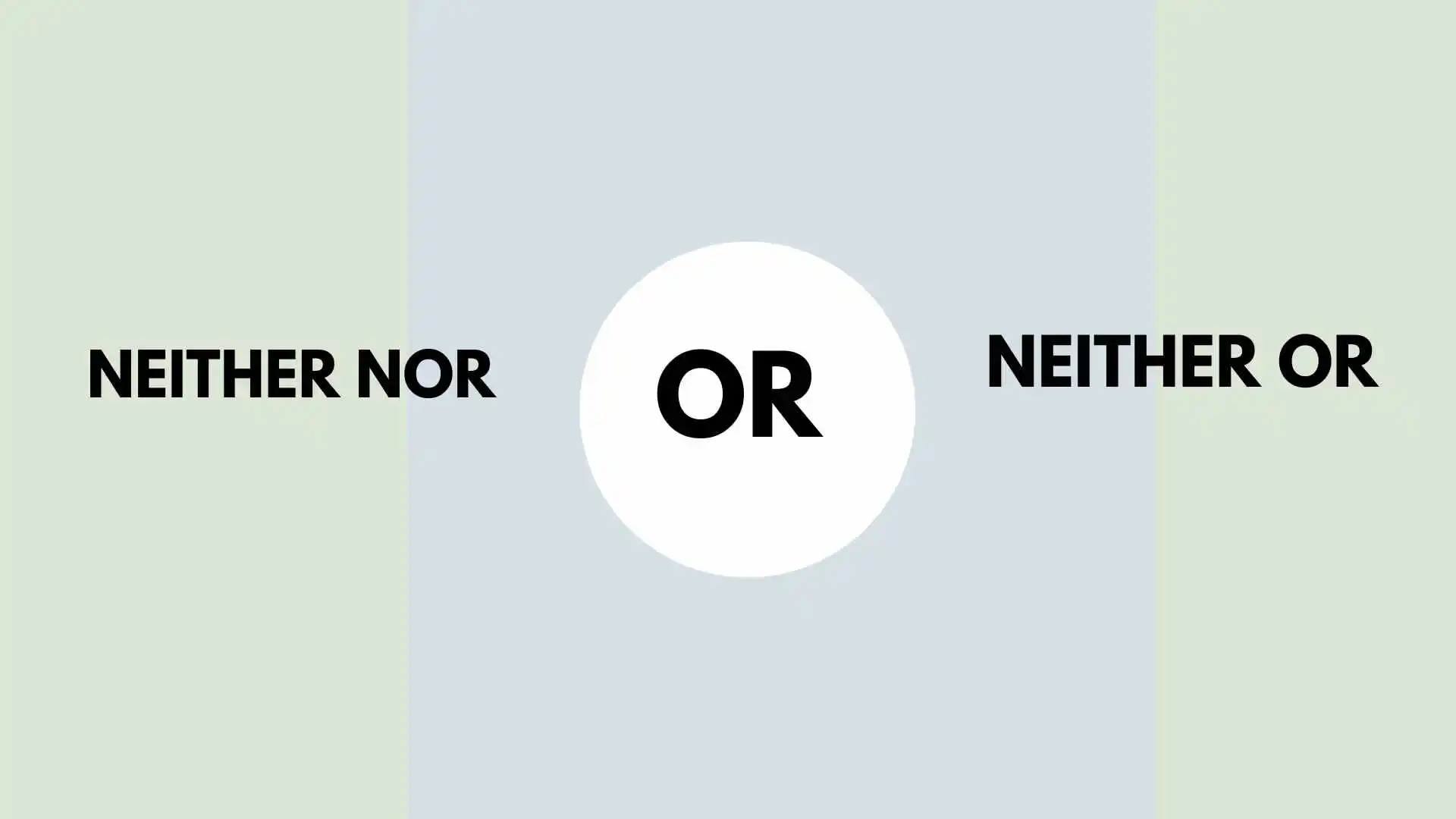
Many English learners get confused between “neither…nor” and “neither…or” because they seem similar. Both are used when talking about two choices, but only one is grammatically correct. Using the wrong form can make your sentences sound awkward or incorrect.
People often search for “neither nor or neither or” to clarify which form to use, especially in writing or formal speech. Understanding this difference is crucial for sounding professional and avoiding common grammar mistakes.
In this article, you will learn the meanings, differences, and proper usage of “neither…nor” versus “neither…or”. We will provide examples, common mistakes, memory tips, and FAQs to make this topic easy for beginners.
Quick Answer
The difference between “neither…nor” and “neither…or” lies in correctness and grammar. “Neither…nor” is the correct form used to connect two negative options, while “neither…or” is grammatically incorrect and should be avoided. Always use “neither…nor” when presenting two alternatives in a negative context.
Meaning and Definition of Each Word
1. Neither
- Definition: Not one and not the other of two options.
- Explanation: It expresses a negative choice between two things.
- Example: Neither option seems right to me.
2. Nor
- Definition: Used after neither to connect a second negative option.
- Explanation: It continues the negative idea from neither.
- Example: I like neither tea nor coffee.
3. Or
- Definition: Used to connect two or more options, generally in positive or neutral sentences.
- Explanation: It is not correct to use or after neither in standard English.
- Example: You can choose tea or coffee.
Key Differences Between the Words
Here’s a simple bullet-point summary of the main differences:
- Correct Pairing: “Neither…nor” ✅ | “Neither…or” ❌
- Usage: “Neither…nor” is used for two negative options.
- Meaning: Expresses “not this and not that.”
- Or Usage: “Or” should not follow neither, as it changes the meaning and creates a grammar error.
- Sentence Example:
- Correct: I have neither a pen nor a pencil.
- Incorrect: I have neither a pen or a pencil.
- Correct: I have neither a pen nor a pencil.
Comparison Table
| Word Pair | Meaning | Usage | Example |
| Neither…nor | Not one and not the other | Connects two negative items | She likes neither apples nor oranges. |
| Neither…or | Grammatically incorrect | Avoid using in formal writing | ❌ I like neither tea or coffee. |
| Or | Presents options without negativity | Connects two positive options | You can choose coffee or tea. |
Examples in Sentences
Correct Usage of Neither…Nor
- He speaks neither English nor Spanish fluently.
- We have neither time nor money for the trip.
- She likes neither cats nor dogs.
- The teacher neither smiled nor frowned at the answer.
- I will neither confirm nor deny the rumor.
Incorrect Usage of Neither…Or
- ❌ I like neither tea or coffee.
- ❌ She has neither patience or understanding.
Remember: Replace or with nor to make the sentence correct.
Common Mistakes
| Mistake | Correct Usage |
| I have neither pen or pencil. | I have neither pen nor pencil. |
| He wants neither coffee or tea. | He wants neither coffee nor tea. |
| She likes neither him or his friends. | She likes neither him nor his friends. |
Many learners mistakenly use or because it feels natural in speech, but formal writing always requires nor after neither.
Tips to Remember the Difference
- Think Negative: If your sentence is negative, always pair neither with nor.
- Use “and not”: You can replace neither…nor with “not this and not that” to check correctness.
- Example: Neither John nor Mary = Not John and not Mary
- Example: Neither John nor Mary = Not John and not Mary
- Avoid Shortcut: Don’t use or after neither, even in casual writing.
- Pronounce Correctly: Saying neither…nor aloud helps solidify correct usage in memory.
When to Use Each Word
- Neither…nor:
- When rejecting two options: “I like neither tea nor coffee.”
- In formal writing or speech: “The manager will neither approve nor reject the proposal.”
- Negative statements about multiple subjects: “Neither the students nor the teachers were late.”
- When rejecting two options: “I like neither tea nor coffee.”
- Or:
- To offer choices positively: “Do you want tea or coffee?”
- Avoid using with neither.
- To offer choices positively: “Do you want tea or coffee?”
Grammar Rules
- Agreement: The verb after neither…nor agrees with the nearest subject.
- Example: Neither the cat nor the dogs are in the garden.
- Example: Neither the dogs nor the cat is in the garden.
- Example: Neither the cat nor the dogs are in the garden.
- Position: Always put nor immediately after neither to maintain clarity.
- Formality: Neither…nor is standard in formal writing; informal speech sometimes incorrectly uses or, but avoid it in exams, reports, and essays.
Synonyms or Related Words
- Not…or → less common, less formal, avoid in writing
- Not this and not that → can be used as an explanatory phrase
- Neither one nor the other → more descriptive variant
Frequently Asked Questions (FAQs)
1. Can we use “neither…or” in English?
No. “Neither…or” is grammatically incorrect. Always use “neither…nor” to connect two negative options.
2. Is “neither…nor” only for formal English?
It is standard in both formal and informal English, but avoid “neither…or” in any context.
3. Can “neither…nor” connect more than two things?
Yes. Example: “She likes neither apples, oranges, nor bananas.”
4. What verb should I use with “neither…nor”?
Use a verb that agrees with the nearest subject: “Neither the teacher nor the students are ready.”
5. Can I use “or” with positive statements?
Yes. Example: “You can have tea or coffee.” But not after “neither.”
6. How can I remember “nor” after neither?
Think “neither = not this, nor = not that.” It always links two negative options.
Conclusion
Understanding the difference between “neither…nor” and “neither…or” is simple once you remember that nor always follows neither in negative contexts. Avoid using or after neither, and your sentences will sound correct and professional. Keep practicing with examples, and soon it will feel natural.