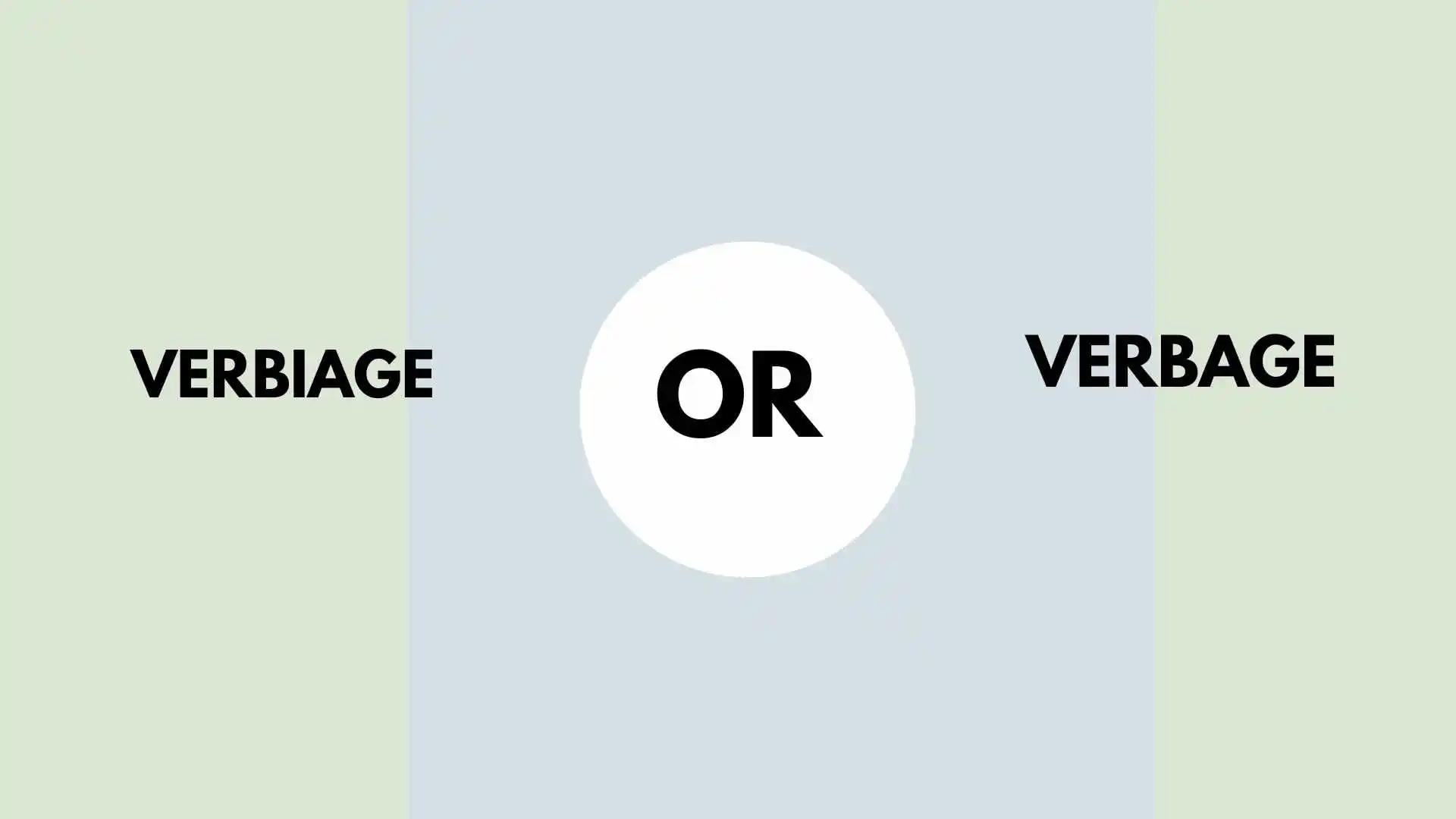
Many people often get confused between the words “verbiage” and “verbage”. You might have seen both versions used in writing or heard them in conversation, and wondered which one is correct. This confusion is common because they sound very similar, but only one is officially recognized in standard English.
Understanding the difference between verbiage and verbage is important, especially if you want to write clearly and professionally. Using the wrong word can make your writing look careless or uneducated, even if your meaning is clear.
Many people search for “[verbiage or verbage]” to make sure they use the correct form in emails, essays, or social media posts.
Quick Answer
The correct word is “verbiage”. It refers to an excessive use of words or the style of wording in speech or writing. “Verbage” is a common misspelling and is not accepted in standard English.
Meaning and Definition of Each Word
1. Verbiage
Definition:
Verbiage refers to the style or manner in which words are used in writing or speech, often implying an excessive or unnecessary use of words.
Simple Explanation:
It’s about the words themselves how many you use and how they are arranged. Too much verbiage can make a sentence wordy or confusing.
Example Sentences:
- The essay was full of verbiage, making it hard to read.
- She tried to reduce the verbiage in her report to make it more concise.
2. Verbage
Definition:
There is no official meaning for “verbage” in standard English. It is usually a misspelling of “verbiage.”
Simple Explanation:
If you write “verbage,” most grammar guides and dictionaries will mark it as incorrect. Always use verbiage instead.
Example Sentence:
- ❌ He used too much verbage in his presentation. (Incorrect)
- ✅ He used too much verbiage in his presentation. (Correct)
Key Differences Between the Words
- Correctness:
- Verbiage is correct and standard English.
- Verbage is incorrect and a common misspelling.
- Verbiage is correct and standard English.
- Meaning:
- Verbiage: Style of wording or excessive wordiness.
- Verbage: No meaning; always a mistake.
- Verbiage: Style of wording or excessive wordiness.
- Usage:
- Verbiage can be used in formal and informal writing.
- Verbage should be avoided in any context.
- Verbiage can be used in formal and informal writing.
- Recognition:
- Verbiage is found in dictionaries like Merriam-Webster and Oxford.
- Verbage is not recognized in standard dictionaries.
- Verbiage is found in dictionaries like Merriam-Webster and Oxford.
Comparison Table
| Word | Meaning | Usage | Example |
| Verbiage | Excessive or particular style of wording | Correct in all contexts | The document’s verbiage made it confusing. |
| Verbage | No meaning, incorrect spelling | Avoid using | ❌ He added too much verbage. |
Examples in Sentences
Verbiage Examples:
- The legal contract was filled with unnecessary verbiage.
- She admired the verbiage in the poet’s work for its elegance.
- The teacher told us to avoid too much verbiage in our essays.
- In business writing, reducing verbiage makes your message clearer.
Incorrect Verbage Usage (for illustration):
- ❌ He used a lot of verbage in his speech.
- ❌ I hate reading documents with so much verbage.
Common Mistakes
- Writing “verbage” instead of “verbiage”
- ❌ Incorrect: The report was filled with verbage.
- ✅ Correct: The report was filled with verbiage.
- ❌ Incorrect: The report was filled with verbage.
- Assuming “verbiage” is always negative
- ❌ Incorrect: His verbiage is terrible. (Only wordiness is negative; sometimes verbiage is neutral.)
- ✅ Correct: His writing style, or verbiage, is very formal.
- ❌ Incorrect: His verbiage is terrible. (Only wordiness is negative; sometimes verbiage is neutral.)
- Using it interchangeably with “vocabulary”
- ❌ Incorrect: The student’s verbage is impressive.
- ✅ Correct: The student’s vocabulary is impressive.
- ❌ Incorrect: The student’s verbage is impressive.
Tips to Remember the Difference
- Think “i” for “in words”: Veriage = style or excess of words.
- Always check dictionaries: If you’re unsure, “verbiage” is correct.
- Spell it carefully: Avoid the common typo “verbage” when typing quickly.
When to Use Each Word
- Verbiage:
- Academic writing: To discuss the style of writing.
- Business emails: To suggest simplifying text.
- Speeches or presentations: To highlight wordiness.
- Academic writing: To discuss the style of writing.
- Verbage:
- Avoid in all cases it is always wrong.
- Avoid in all cases it is always wrong.
Grammar Rules
- Part of Speech: Noun
- Example: The verbiage of the document was unnecessarily complicated.
- Example: The verbiage of the document was unnecessarily complicated.
- Plural Form: Verbiages
- Example: The two essays had very different verbiages.
- Example: The two essays had very different verbiages.
- Modifiers: You can use adjectives like excessive, formal, or plain.
- Example: Excessive verbiage can confuse readers.
- Example: Excessive verbiage can confuse readers.
Synonyms or Related Words
- Wordiness
- Wording
- Expression
- Phraseology
- Rhetoric
These words can sometimes replace verbiage, depending on context.
Frequently Asked Questions (FAQs)
- Is “verbage” correct?
❌ No. “Verbage” is a misspelling of verbiage. Always use verbiage. - What does verbiage mean?
✅ Verbiage refers to the style of wording or excessive use of words in speech or writing. - Can verbiage be positive?
✅ Yes, verbiage can describe style without negative connotation, but it often implies wordiness. - Is verbiage formal or informal?
✅ Verbiage is neutral; it can be used in both formal and informal writing. - How do I remember the correct spelling?
✅ Think of the “i” in verbiage as “in words” to remind yourself it is correct. - Are there similar words to verbiage?
✅ Yes, such as wording, phraseology, or wordiness.
Conclusion
The correct word is verbiage, and it refers to the style or excessive use of words in writing or speech. Avoid using verbage, as it is a common misspelling. By remembering the “i” in verbiage and understanding its meaning, you can write more clearly and confidently. Keep this guide handy, and soon you will never confuse these two words again.