If you have come across RTPS while using online banking, reading a financial document, or researching digital payments, you may be wondering: what does RTPS mean?
In banking and finance, RTPS commonly stands for Real-Time Payment System or Real-Time Payments System. It describes payment infrastructure designed to process electronic payments rapidly, often allowing the recipient to access funds within seconds or near real time.
However, there is an important point to understand: RTPS does not always refer to one universal payment network. Different countries, banks, financial institutions, and payment organizations may use different names or abbreviations for their instant-payment infrastructure. The exact meaning therefore depends on the context in which you see the term.
A real-time payment system is different from many traditional payment methods because it is designed around rapid processing and availability, often operating outside normal banking hours. This makes real-time payments useful for consumers, merchants, businesses, freelancers, and financial institutions.
In this guide, we will explain the RTPS meaning, its full form, how an RTPS transaction works, how real-time payments differ from ACH and wire transfers, the role of settlement, fees and limits, security considerations, and common questions people have about RTPS.
What Does RTPS Mean?
The most common RTPS full form in banking and finance is Real-Time Payment System or Real-Time Payments System.
An RTPS is a payment infrastructure that allows participating financial institutions to send and receive electronic payment instructions rapidly. Depending on the particular network, eligible transactions may be processed and settled within seconds or a very short period.
The basic idea is simple:
RTPS allows money to move electronically through a payment network with much less waiting than many traditional payment methods.
For example, suppose you want to send money to another person. With a conventional transfer, the transaction might be processed during specific banking windows or through batch processing. With a compatible real-time payment service, the payment may be processed almost immediately.
The exact experience depends on the payment network, the participating banks, transaction limits, security checks, and other conditions.
RTPS Meaning in Banking
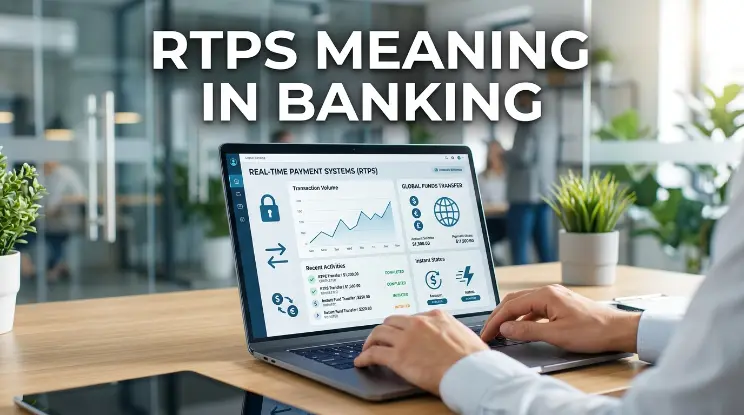
When people search for RTPS meaning in banking, they are generally referring to a system that enables fast electronic transfers between participating banks or payment providers.
A typical real-time payment process involves several stages:
- The sender initiates a payment.
- The sender’s financial institution authenticates the customer.
- The transaction is checked for sufficient funds and other requirements.
- The payment instruction is sent through the relevant payment network.
- The receiving institution processes the payment.
- Settlement occurs according to the network’s rules.
- The recipient receives confirmation and, where applicable, access to the funds.
Although the customer may see the transaction as nearly instantaneous, several technical and financial processes can happen behind the scenes.
This distinction is important because payment messaging, processing, settlement, and fund availability are related but not necessarily identical concepts.
RTPS Meaning Can Vary by Country and Context
One of the most important things to understand about RTPS is that the abbreviation does not necessarily identify one worldwide payment system.
Different countries have developed their own instant-payment infrastructures. Some systems are operated or overseen by central banks, while others involve commercial banks, payment companies, or specialized payment-system operators.
For this reason, if you see RTPS on a particular banking app, financial website, statement, or document, you should check the surrounding information.
The term could refer to:
- A general real-time payment system
- A particular country’s instant-payment infrastructure
- A bank’s real-time transfer service
- A payment network
- A technical payment-processing system
Therefore, RTPS meaning in finance should always be interpreted in context.
This is also why it would be inaccurate to say that every country has one payment network officially called “RTPS.”
What Is a Real-Time Payment System?
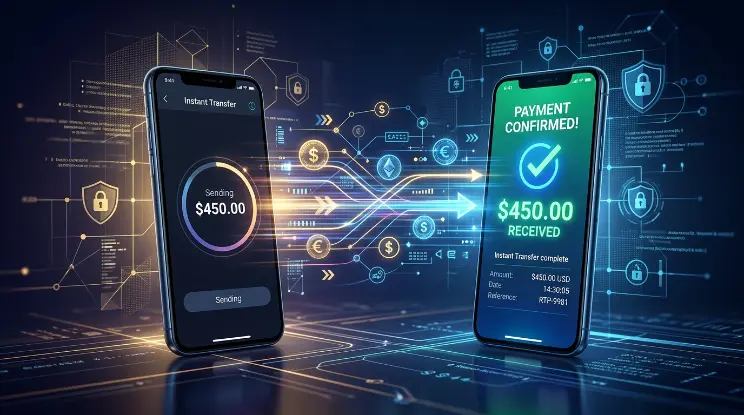
A Real-Time Payment System is payment infrastructure designed to process eligible transactions rapidly rather than waiting for conventional batch-processing cycles.
Real-time payment systems generally aim to provide several important capabilities:
- Rapid payment processing
- Fast confirmation
- Electronic fund transfers
- Extended or 24/7 availability
- Faster access to funds
- Connectivity between participating institutions
The exact features vary between payment networks.
Some networks may support consumer payments, business payments, government payments, merchant payments, or multiple types of transactions.
How Does an RTPS Payment Work?
Understanding how does an RTPS payment work becomes easier with a simple example.
Imagine that Sara wants to send $200 to John.
Step 1: Sara Initiates the Payment
Sara opens her bank’s mobile application and selects the transfer or payment option supported by the bank.
She enters John’s required payment information.
Depending on the system, this could include an account number, mobile number, payment alias, or another identifier.
Step 2: Customer Authentication
Sara may need to authenticate the transaction.
The bank could use:
- Password authentication
- PIN verification
- Biometric authentication
- One-time passcodes
- Device verification
- Other security methods
Step 3: Payment Validation
The financial institution checks the payment.
Possible checks include:
- Available account balance
- Transaction limits
- Recipient information
- Account status
- Fraud indicators
- Compliance requirements
Step 4: Payment Routing
If the transaction is approved, the payment instruction is routed through the appropriate payment infrastructure.
The real-time payment network communicates with the participating institutions involved in the transaction.
Step 5: Receiving Institution Processes the Payment
John’s bank or payment provider receives the payment instruction and processes it according to the network’s rules.
Step 6: Settlement and Fund Availability
The payment is settled through the relevant financial infrastructure.
If everything is successful, John can receive confirmation and, depending on the system, access to the funds very quickly.
This entire process can happen much faster than many traditional electronic payment methods.
What Does “Real Time” Actually Mean?
The term real time can sometimes create confusion.
It does not necessarily mean that every transaction is guaranteed to complete in exactly one second.
Instead, it generally means that the payment infrastructure is designed to process transactions rapidly, often continuously rather than waiting for a scheduled batch.
A transaction can still take longer because of:
- Fraud screening
- Technical problems
- Incorrect information
- Bank restrictions
- Network interruptions
- Compliance checks
- Account limitations
Therefore, real-time payment processing should be understood as rapid processing rather than an absolute guarantee of instantaneous completion.
Real-Time Payment Processing vs. Settlement
Another important concept is the difference between processing and settlement.
Payment Processing
Processing involves activities such as:
- Receiving the payment instruction
- Validating information
- Authenticating the customer
- Checking funds
- Performing fraud controls
- Routing the payment
Settlement
Settlement refers to the process through which financial institutions settle the obligations created by payment transactions.
In some real-time payment systems, settlement between participating institutions can occur very quickly or continuously. In others, the customer-facing payment experience and the underlying settlement mechanism may operate differently.
This means that saying “the payment is real time” does not automatically mean every back-end financial process works in precisely the same way.
That distinction makes the explanation of RTPS meaning in banking more accurate.
Key Features of RTPS
Although different networks operate differently, many real-time payment systems share several characteristics.
1. Rapid Transfers
The primary purpose is to reduce waiting time.
Eligible payments can often move much faster than traditional transfers.
2. Extended Availability
Many modern instant-payment systems are designed to operate 24 hours a day, seven days a week, including weekends and holidays.
However, the exact availability depends on the network and financial institution.
3. Digital Processing
RTPS transactions are generally electronic.
Customers may access real-time payments through:
- Mobile banking apps
- Online banking
- Digital wallets
- Payment applications
- Merchant platforms
- Business banking systems
4. Fast Confirmation
Customers can often receive a payment status or confirmation shortly after initiating the transaction.
5. Multiple Payment Use Cases
Real-time payment infrastructure can support various types of payments, including:
- Person-to-person transfers
- Consumer-to-business payments
- Business-to-business payments
- Merchant payments
- Certain government payments
The specific capabilities vary by network.
RTPS vs. Traditional Bank Transfers
One of the easiest ways to understand an RTPS payment system is to compare it with traditional transfers.
Traditional electronic payments may use batch processing or scheduled clearing cycles. This can create delays between the time a customer initiates a payment and the time the recipient receives the money.
Real-time payment systems are designed to reduce this waiting period.
| Feature | Real-Time Payments | Traditional Transfers |
| Processing speed | Usually very fast | May take longer |
| Availability | Often 24/7 | May follow processing schedules |
| Confirmation | Usually rapid | May be delayed |
| Fund availability | Often fast | Can take longer |
| Processing model | Designed for rapid/continuous processing | May involve batch processing |
| Typical experience | Near immediate | Waiting may be required |
The exact differences depend on the specific payment systems being compared.
RTPS vs. ACH
A common question is the difference between RTPS and ACH.
ACH stands for Automated Clearing House and is widely used for electronic payments in the United States.
ACH supports important payment use cases such as:
- Direct deposits
- Payroll
- Recurring bills
- Business payments
- Account-to-account transfers
Real-time payment systems are designed for faster processing.
| Feature | RTPS / Real-Time Payments | ACH |
| Speed | Generally very fast | Can take longer |
| Processing | Designed for rapid processing | Uses established clearing processes |
| Availability | Often 24/7 | Depends on ACH processing rules |
| Common use | Fast transfers and payments | Payroll, bills, recurring payments |
| Best advantage | Speed | Broad established use |
Neither system is automatically better for every situation.
A business may prefer ACH for recurring payroll, while real-time payments may be more appropriate when immediate payment availability is important.
RTPS vs. Wire Transfer
Another important comparison is RTPS vs. wire transfer.
Wire transfers are commonly used for high-value or specific banking transactions. Depending on the type of wire and the financial institutions involved, they can be fast but may have higher fees or different operating requirements.
Real-time payments are generally designed to make eligible everyday electronic payments faster.
| Feature | Real-Time Payments | Wire Transfer |
| Speed | Usually very fast | Can be fast |
| Typical use | Everyday digital payments | Often larger or specialized payments |
| Fees | Vary | Can be relatively high |
| Availability | Often extended hours | Depends on wire system |
| Transaction limits | Network/bank dependent | Often designed for larger amounts |
The appropriate option depends on the amount, destination, urgency, cost, and requirements of the payment.
RTPS vs. RTP: Are They the Same?
The terms RTPS and RTP are closely related, but they should not automatically be treated as identical.
RTP can mean Real-Time Payments as a general concept. It can also refer to a particular payment network or service depending on the context.
RTPS commonly refers to a Real-Time Payment System or Real-Time Payments System, emphasizing the infrastructure or system that enables real-time payments.
For example:
- RTP: Real-Time Payments
- RTPS: Real-Time Payment System
However, terminology is not standardized globally, so the organization using the abbreviation matters.
Benefits of Real-Time Payments
The growth of real-time payment infrastructure is driven by several practical benefits.
Faster Access to Funds
Recipients can potentially access money much sooner than with slower payment methods.
This can be useful when someone needs to receive funds urgently.
Better Customer Experience
People increasingly expect digital services to work quickly.
Real-time payments can make transferring money more convenient.
Improved Business Cash Flow
Businesses often need to manage incoming and outgoing cash efficiently.
Receiving customer payments faster can reduce the waiting period between a sale and access to funds.
24/7 Payment Capability
If the relevant network operates continuously, users can initiate eligible payments outside traditional banking hours.
Reduced Reliance on Cash
Convenient digital payments can reduce the need to use physical cash for everyday transactions.
Faster Business Operations
Companies can potentially use real-time payments for supplier payments, customer collections, marketplace transactions, and other financial activities.
Disadvantages of Real-Time Payments
Despite their advantages, real-time payments also have limitations.
Difficult-to-Reverse Transactions
Once a payment has been successfully completed, it may be difficult to reverse.
This makes recipient verification extremely important.
Fraud and Scam Risk
Scammers can take advantage of fast payment systems.
They may use:
- Fake invoices
- Impersonation
- Phishing
- Fake investment opportunities
- Fake customer-support messages
- Urgent payment requests
Because money can move quickly, victims may have less opportunity to stop a fraudulent transaction.
Transaction Limits
Banks and payment providers may impose limits based on:
- Transaction amount
- Daily transfer volume
- Customer account type
- Risk profile
- Payment network rules
Service Availability
A real-time payment may only work when the relevant institutions participate in a compatible network.
Technical Problems
Even modern payment infrastructure can experience:
- System outages
- Authentication errors
- Network problems
- Maintenance
- Fraud-prevention delays
RTPS Fees and Transaction Costs
A common misconception is that all real-time payments are free.
That is not necessarily true.
Fees depend on the specific bank, payment provider, network, account type, and transaction.
Possible pricing models include:
- Free transfers
- Flat transaction fees
- Business transaction fees
- Fees above certain limits
- Different pricing for different payment channels
Before making an important payment, users should check the fee information provided by their financial institution.
RTPS Transaction Limits
Real-time payment systems can have transaction limits.
For example, a bank may establish:
- Maximum amount per transaction
- Maximum daily transfer amount
- Maximum number of transactions
- Additional limits for new recipients
These limits are often designed to manage fraud, risk, and regulatory requirements.
Importantly, there is no single universal RTPS transaction limit.
The applicable limit depends on the payment network and the institution providing the service.
Is RTPS Available 24/7?
Many modern real-time payment systems are designed to operate 24/7/365.
That means eligible payments can potentially be processed on:
- Weekdays
- Weekends
- Public holidays
- Evenings
- Early mornings
However, the availability of a specific service depends on the network, participating institutions, technical maintenance, and other conditions.
Therefore, it is safer to say that many RTPS-style systems support continuous availability, rather than claiming that every real-time payment service is always available.
Is RTPS Safe?
Real-time payments can be secure when supported by appropriate technology, financial controls, and customer authentication.
Financial institutions may use:
- Encryption
- Customer authentication
- Fraud monitoring
- Transaction screening
- Device verification
- Account alerts
- Transfer limits
- Suspicious-activity detection
However, no payment system can eliminate every risk.
The user also has an important role in protecting the transaction.
How to Use Real-Time Payments Safely
Before making an RTPS transaction:
- Verify the recipient’s details.
- Double-check the payment amount.
- Never share your password or PIN.
- Never give an authentication code to someone who contacts you unexpectedly.
- Be careful with urgent payment requests.
- Verify invoices through trusted contact information.
- Use your bank’s official application or website.
- Enable transaction notifications when available.
- Contact your financial institution immediately if you notice suspicious activity.
What Happens If You Send an RTPS Payment to the Wrong Person?
This is one of the most important practical questions about real-time payments.
Because transactions can be completed rapidly, you may not have much time to stop an incorrect payment.
If you accidentally send money to the wrong recipient:
- Contact your bank or payment provider immediately.
- Explain that the payment was sent incorrectly.
- Provide the transaction reference and relevant details.
- Ask whether a recovery or recall process is available.
- If you believe it was fraud, report it immediately.
Whether the money can be recovered depends on the payment system, circumstances, recipient cooperation, and financial institution procedures.
The best protection is to verify the recipient before confirming the payment.
Examples of RTPS Use Cases
Real-time payments can be useful in many everyday and business situations.
Person-to-Person Payments
A person can send money to a friend or family member without relying on slower payment cycles.
Small-Business Payments
A small business can receive payment from a customer and potentially access the funds quickly.
Merchant Payments
Real-time infrastructure can support fast digital payments at participating merchants.
Freelance and Gig Payments
Workers may benefit from receiving eligible payments more quickly.
Emergency Transfers
When money needs to be moved urgently, real-time payment infrastructure can provide a faster alternative to some traditional methods.
Business-to-Business Payments
Companies can use real-time payment infrastructure for certain supplier, invoice, or operational payments.
RTPS for Consumers
For consumers, the biggest advantage is convenience.
Imagine that you need to send money to a family member on a Sunday evening. A traditional payment method with limited processing windows could create a delay.
If both financial institutions support an eligible real-time payment service, the transfer may be completed much faster.
Real-time payments can therefore be useful for:
- Splitting bills
- Sending money to family
- Paying participating merchants
- Receiving money
- Making urgent transfers
- Managing everyday expenses
RTPS for Businesses
Businesses can also benefit from faster payments.
A company may use real-time payment infrastructure to improve:
- Customer collections
- Cash flow
- Supplier payments
- Marketplace settlements
- Refund processes
- Digital checkout experiences
For smaller businesses in particular, faster access to incoming funds can make day-to-day financial management easier.
Common RTPS Misconceptions
“RTPS Always Means One Specific Payment Network”
False.
RTPS is commonly used as an abbreviation for a real-time payment system, but the exact meaning depends on the context.
“Every RTPS Payment Is Completely Instant”
Not necessarily.
The system may be designed for very fast processing, but fraud checks, technical issues, and other conditions can cause delays.
“Every Bank Supports RTPS”
False.
Participation depends on the specific payment network and financial institution.
“RTPS Payments Are Always Free”
False.
Fees depend on the bank, provider, network, and transaction type.
“Real-Time Payments Have No Security Checks”
False.
Financial institutions can use authentication, fraud detection, transaction monitoring, and other security measures.
Frequently Asked Questions About RTPS
What is the RTPS full form?
The most common RTPS full form in banking and finance is Real-Time Payment System or Real-Time Payments System.
What does RTPS mean in banking?
RTPS meaning in banking generally refers to payment infrastructure designed to process eligible electronic payments rapidly between participating financial institutions.
What does RTPS stand for?
RTPS commonly stands for Real-Time Payment System, although the exact terminology can vary by organization and country.
What is an RTPS transaction?
An RTPS transaction is an electronic payment processed through a real-time payment system. Depending on the network, the transaction may be completed and funds made available within seconds or a short period.
How does an RTPS payment work?
An RTPS payment generally involves payment initiation, customer authentication, transaction validation, network routing, receiving-bank processing, settlement, and confirmation.
Is RTPS the same as RTP?
Not always. RTP commonly means Real-Time Payments, while RTPS commonly means Real-Time Payment System. The exact terminology depends on the context.
Is RTPS the same as instant payment?
They are closely related concepts. A real-time payment system is infrastructure designed to enable fast or instant-style payments, but the exact features depend on the specific network.
How fast are RTPS payments?
Eligible real-time payments are generally designed to process very quickly, often within seconds. However, actual processing time can vary because of security checks, technical problems, or other restrictions.
Does RTPS work 24/7?
Many real-time payment systems are designed to operate around the clock. However, availability depends on the specific network and participating financial institutions.
Are RTPS payments safe?
They can be secure and may include authentication, fraud monitoring, encryption, and transaction controls. Users should still verify recipients and protect their banking credentials.
Can an RTPS payment be reversed?
A completed real-time payment may be difficult to reverse. If you make a mistake or suspect fraud, contact your financial institution immediately.
Is RTPS available internationally?
Not necessarily. Real-time payment systems are generally connected to specific national or regional payment infrastructures. Cross-border real-time payments require compatible arrangements between the relevant systems.
Does RTPS have transaction limits?
Yes, a bank or payment provider may impose transaction or daily limits. There is no single universal RTPS limit because rules vary by institution and network.
Final Thoughts: RTPS Meaning Explained
The simplest explanation of RTPS meaning is that it commonly refers to a Real-Time Payment System payment infrastructure designed to process eligible electronic transactions rapidly.
Unlike many traditional payment methods that can involve batch processing or longer settlement cycles, real-time payment systems are designed to provide faster payment processing and, in many cases, rapid access to funds.
However, RTPS is not necessarily the name of one universal global payment network. Its exact meaning can depend on the country, bank, payment provider, or financial document where you encounter the abbreviation.