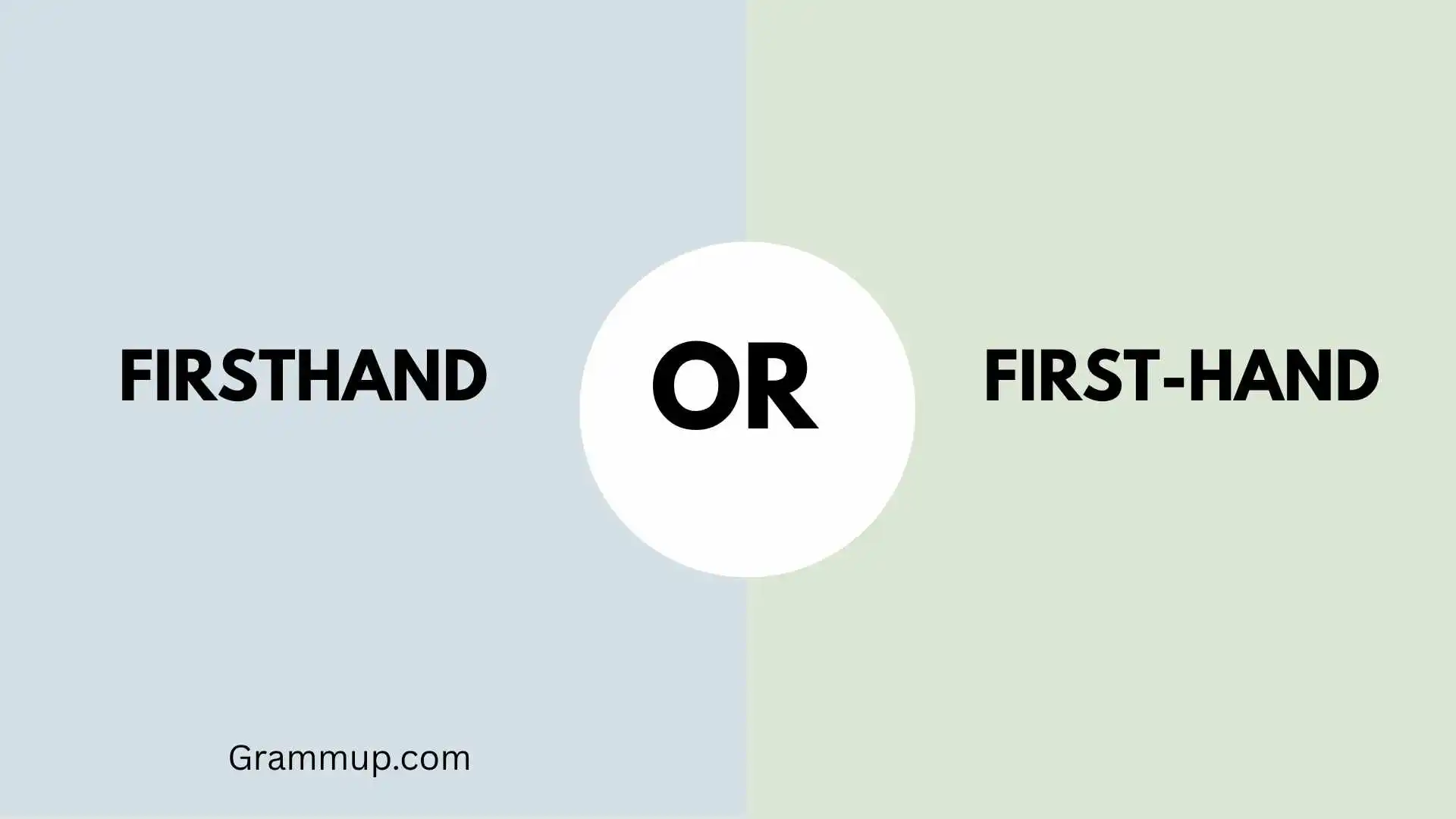
Many English learners and even native speakers often get confused between “firsthand” and “first-hand.” At first glance, both words look almost identical, and in fact, they sound exactly the same when spoken. So naturally, people wonder: Which one is correct? Is there a difference, or can we use both?
This confusion is very common because English has many words that change form depending on how they are used in a sentence. That’s why thousands of people search for “firsthand or first-hand” every dayto understand which version is right and when to use it properly.
Understanding the correct usage is important, especially if you want to improve your writing, sound more professional, and avoid common grammar mistakes. In this article, you will learn the meanings, differences, grammar rules, examples, and easy tips to confidently use firsthand and first-hand in the right way.
Quick Answer
Both “firsthand” and “first-hand” are correct, but they are used differently.
“Firsthand” (one word) is more common in modern English, especially in American English.
“First-hand” (with a hyphen) is often used in British English or as a compound adjective before a noun.
Meaning and Definition of Each Word
Firsthand (One Word)
Definition:
“Firsthand” means experiencing or learning something directly from the original source, not through someone else.
Explanation:
When you see, hear, or experience something yourself, you gain firsthand knowledge.
Examples:
- I got firsthand experience working in a hospital.
- She heard the news firsthand from the manager.
- He shared his firsthand account of the event.
First-Hand (Hyphenated)
Definition:
“First-hand” has the same meaning as “firsthand,” but it is often used as a compound adjective before a noun.
Explanation:
It describes something that comes directly from the source, just like “firsthand,” but follows slightly different style rules.
Examples:
- He gave a first-hand report of the accident.
- She has first-hand knowledge of the situation.
- We need first-hand information to understand the issue.
Key Differences Between the Words
Here are the main differences between firsthand and first-hand:
- Spelling:
- “Firsthand” = one word
- “First-hand” = hyphenated form
- Usage Style:
- “Firsthand” is more common in modern and American English
- “First-hand” is often seen in British English
- Grammar Role:
- “Firsthand” can be used as an adverb or adjective
- “First-hand” is mostly used as an adjective before a noun
- Trend:
- “Firsthand” is becoming more popular and widely accepted globally
Comparison Table
| Word | Meaning | Usage | Example |
| Firsthand | Direct experience or knowledge | Adjective / Adverb | I learned this firsthand. |
| First-hand | Same meaning, more traditional spelling | Adjective (before a noun) | She gave a first-hand account. |
Examples in Sentences
Using “Firsthand”
- I experienced the situation firsthand.
- She gained firsthand knowledge during her internship.
- We saw the results firsthand.
- He shared his firsthand story with us.
- You need to witness it firsthand to understand it.
Using “First-Hand”
- They provided a first-hand report of the incident.
- She has first-hand experience in teaching.
- The journalist collected first-hand information.
- He wrote a first-hand account of the war.
- We need first-hand evidence before making a decision.
Common Mistakes
Here are some common mistakes people make:
❌ Incorrect:
- I got this information first hand.
- She has first hand experience.
✅ Correct:
- I got this information firsthand.
- She has first-hand experience.
Explanation:
Writing “first hand” as two separate words is usually incorrect in modern English. Always use either firsthand or first-hand.
Tips to Remember the Difference
Here are some easy tips:
- 👉 Think of “firsthand” as the modern, simpler version
- 👉 Use “first-hand” when it comes before a noun (especially in formal writing)
- 👉 Avoid writing it as two separate words (first hand)
- 👉 If unsure, use “firsthand”it is widely accepted everywhere
When to Use Each Word
Use “Firsthand” When:
- You are writing in American English
- You want a simple and modern style
- You are using it as an adverb
- Example: I saw it firsthand.
Use “First-Hand” When:
- You are following British English style
- You are writing formal or traditional content
- You are using it before a noun
- Example: first-hand experience
Grammar Rules
- “Firsthand” can function as:
- Adjective: firsthand experience
- Adverb: learned firsthand
- “First-hand” is usually:
- A compound adjective (used before nouns)
- Never separate it into two words:
- ❌ first hand
- ✅ firsthand / first-hand
Synonyms or Related Words
Here are some similar words you can use:
- Direct
- Personal
- Immediate
- Eyewitness
- Authentic
Examples:
- She gave a direct account of the event.
- He had personal experience in the field.
Frequently Asked Questions (FAQs)
1. Is “firsthand” or “first-hand” correct?
Both are correct, but “firsthand” is more common in modern English.
2. Can I write “first hand” as two words?
No, this is generally incorrect. Use “firsthand” or “first-hand.”
3. Which form is used in American English?
American English mostly uses “firsthand.”
4. Which form is used in British English?
British English often uses “first-hand.”
5. Is there a difference in meaning?
No, both words have the same meaningdirect experience.
6. Which one should I use in exams?
Use “firsthand” unless your teacher prefers British English style.
Conclusion
In summary, the confusion between firsthand or first-hand comes down to spelling and style, not meaning. Both forms are correct and mean the same thingdirect experience from the original source. However, “firsthand” is more common in modern usage, while “first-hand” is often used in British or formal contexts.
To avoid mistakes, remember not to write it as two separate words, and when in doubt, go with “firsthand” for simplicity and clarity.