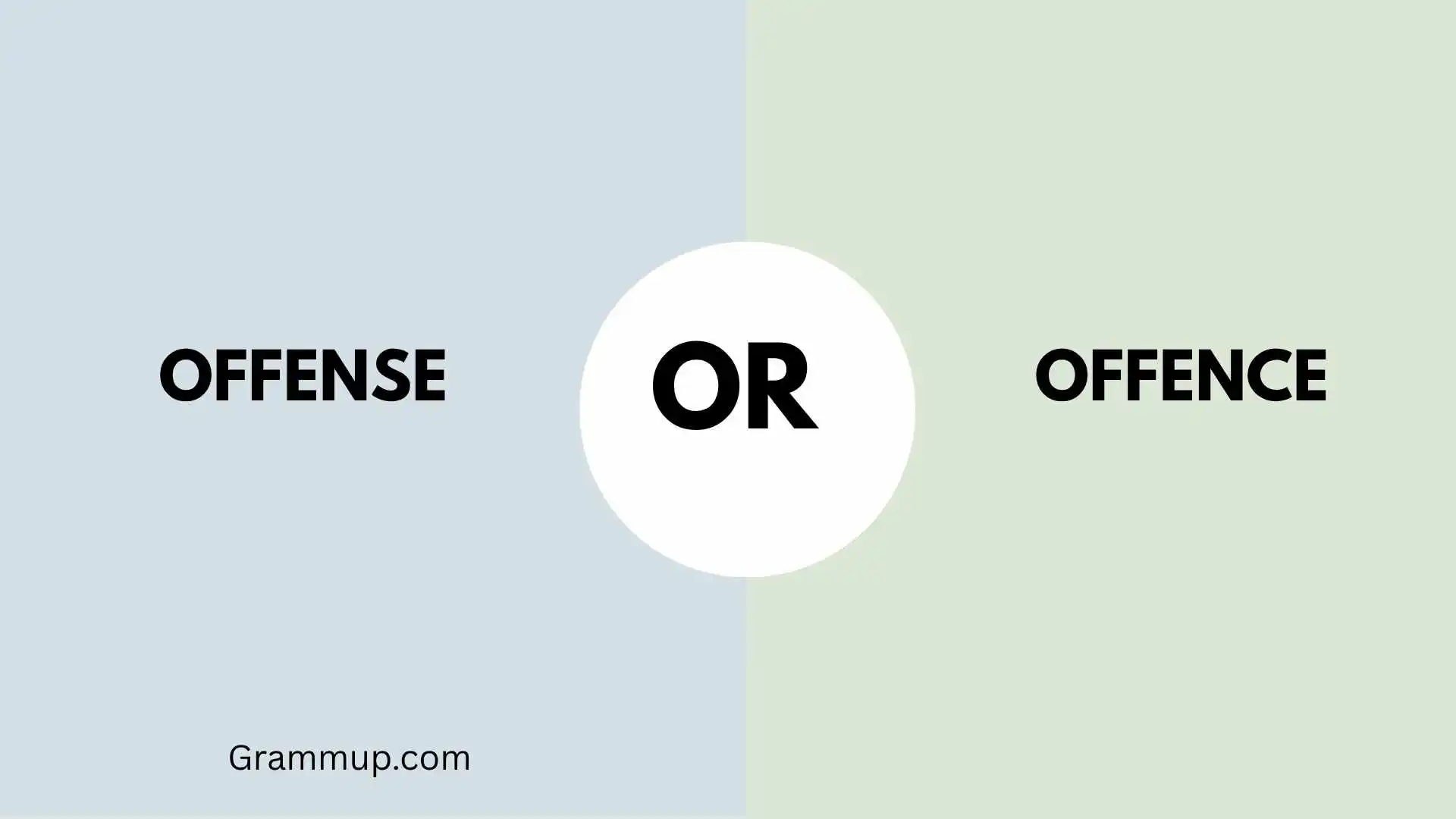
Offense or Offence is a common spelling question that often confuses English learners, writers, and students. The good news is that both words are correct, but their usage depends mainly on the type of English you are using.
“Offense” is the preferred spelling in American English, while “offence” is commonly used in British English. Both words have the same meaning and can refer to an illegal act, something that causes anger or hurt feelings, or a violation of rules. Understanding this small spelling difference can help you write more accurately and confidently.
You are creating an academic paper, writing a blog post, sending a message, or simply improving your English skills, knowing when to use offense or offence is useful. In this article, we will explain the difference between these two spellings in a simple and clear way.
Quick Answer
The difference between offense and offence is simple:
- “Offense” is the American English spelling.
- “Offence” is the British English spelling.
Both words have the same meaning and can be used interchangeably depending on the type of English you are using.
Meaning and Definition of Each Word
1. Offense (American English)
Definition:
“Offense” refers to something that causes hurt feelings, anger, or a violation of rules or laws.
Simple Explanation:
It can mean:
- Making someone feel upset or insulted
- Breaking a law (a crime)
- In sports, the team that is trying to score
Examples:
- His comment caused great offense.
- Stealing is a serious offense.
- The team’s offense played very well.
2. Offence (British English)
Definition:
“Offence” has the same meaning as “offense,” but it is used in British English.
Simple Explanation:
It also refers to:
- Something that hurts feelings
- A crime or illegal act
- A sports strategy
Examples:
- She took offence at his words.
- It is a criminal offence.
- Their offence was strong during the match.
Key Differences Between the Words
Here are the main differences between offense and offence:
- Spelling:
- Offense → American English
- Offence → British English
- Meaning:
- Both words have exactly the same meaning
- Usage:
- Offense → Used in the United States
- Offence → Used in the UK, Canada, Australia, etc.
- Grammar:
- No difference in grammar or sentence structure
- Preference:
- Choose based on your audience or writing style
Comparison Table
| Word | Meaning | Usage | Example Sentence |
| Offense | Hurt feelings or a crime | American English | That joke caused offense. |
| Offence | Hurt feelings or a crime | British English | That joke caused offence. |
Examples in Sentences
Using “Offense” (American English)
- He didn’t mean to give any offense.
- Driving without a license is an offense.
- The team’s offense scored three goals.
- Her words caused deep offense.
- This is a punishable offense under the law.
Using “Offence” (British English)
- No offence was intended.
- Lying in court is a serious offence.
- Their offence dominated the game.
- He took offence at the remark.
- This act is considered a criminal offence.
Common Mistakes
Many people make simple mistakes when using offense or offence. Here are the most common ones:
❌ Mixing Both Spellings in One Text
- Incorrect: The offense was serious, and it caused great offence.
- ✔ Correct: Use one style consistently (either all American or all British).
Using the Wrong Spelling for Your Audience
- Writing for a US audience → Use offense
- Writing for a UK audience → Use offence
Thinking They Have Different Meanings
- Incorrect: Offense and offence are different words.
- ✔ Correct: They have the same meaning; only spelling differs.
Tips to Remember the Difference
Here are some easy tricks to remember:
✅ Tip 1: Think of “C” for Commonwealth
- Offence → Used in British/Commonwealth countries
- The “C” in “offence” can remind you of “Commonwealth”
Tip 2: Think of “S” for States
- Offense → Used in the United States
- The “S” helps you remember “States”
Tip 3: Stay Consistent
- Pick one style (American or British) and stick with it throughout your writing.
When to Use Each Word
Use “Offense” When:
- Writing in American English
- Your audience is in the United States
- Following US grammar rules (e.g., in exams like TOEFL)
Use “Offence” When:
- Writing in British English
- Your audience is in the UK, Pakistan, India, or Australia
- Following British grammar (e.g., IELTS)
Grammar Rules (Important Notes)
- Both offense and offence are nouns
- The verb form is offend
- The adjective form is offensive
Examples:
- He may offend someone. (verb)
- That comment was offensive. (adjective)
- It caused great offense/offence. (noun)
Synonyms or Related Words
Here are some words similar in meaning:
- Insult
- Hurt
- Crime
- Violation
- Wrongdoing
- Disrespect
Example:
- His behavior was an insult (similar to offense/offence).
Frequently Asked Questions (FAQs)
1. Is offense or offence correct?
Both are correct. “Offense” is American English, while “offence” is British English.
2. Which spelling should I use in Pakistan?
In Pakistan, British English is more common, so “offence” is usually preferred.
3. Do offense and offence have different meanings?
No, they have the same meaning. Only the spelling is different.
4. Can I use both in the same article?
No, it is better to stay consistent and use only one spelling style.
5. What is the verb form of offense/offence?
The verb form is “offend.”
6. Is offense used in sports?
Yes. In American English, offense also refers to the team that is trying to score.
Conclusion
Understanding the difference between offense or offence is actually very simple. Both words have the same meaning, but the spelling depends on whether you are using American or British English. If you are writing for a US audience, use offense. If you are writing for a UK or international audience, use offence.
The key is consistency. Choose one style and stick with it throughout your writing. Once you remember this small spelling difference, you’ll never get confused again.